The immortality experiment
Miss Peregrine's Home of Peculiar ChildrenThe immortality experiment was a forbidden effort to turn time-loop knowledge into a means of reversing aging and living beyond the limits that ordinarily govern Peculiars. Its catastrophic failure did not simply defeat its goal: it produced the Hollowgasts, making the experiment’s promise of freedom from death inseparable from a new, enduring form of suffering and danger.
Origins and Ambition
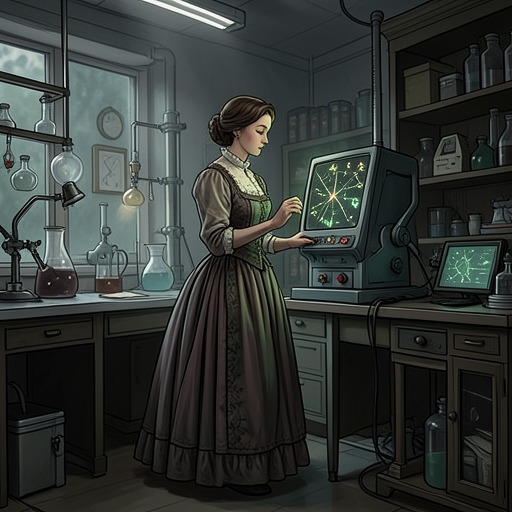
Peculiars had long used time loops to delay aging, but this protection came at a steep price: long-term residents could only venture briefly into the ongoing present before they would wither and die. Around the turn of the twentieth century, a splinter faction rejected these limits. Its members believed that time loops could be manipulated not merely to suspend aging, but to reverse it, allowing eternal youth outside loops and movement between past and future without the usual consequences.
The faction’s theory challenged the established understanding of time-loop mechanics and mortality. Miss Peregrine regarded the proposal as impossible under the laws governing the world, and dangerous even if it could be achieved. The ambition was not simply to extend life within a protected loop; it was to overcome the constraints that made Peculiars’ use of loops costly and bounded.
Participants and the Siberian Experiment
Miss Peregrine’s two brothers, described as technically brilliant but short on judgment, embraced the proposal and asked her to help realize it. She refused, warning them that they were trying to make themselves gods and that the attempt should not be made. They had grown up among Miss Avocet’s ymbrynes-in-training, which had given them unusual knowledge of the ymbrynes’ art—enough to attempt the work, but not enough to make it safe.
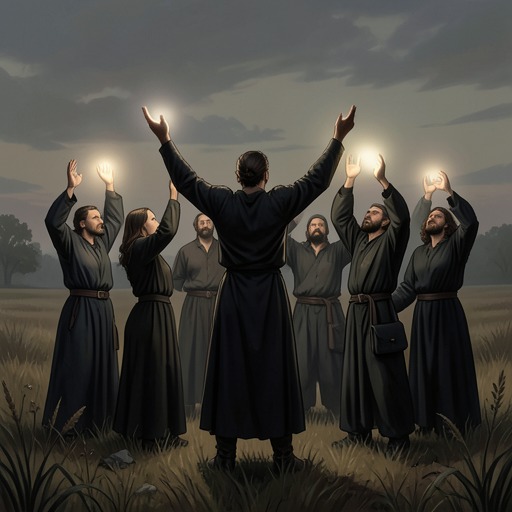
Despite warnings and threats from the Council, in the summer of 1908 the brothers went to the Siberian tundra with several hundred members of the renegade faction. Powerful ymbrynes were among the participants. They selected an unnamed loop that had been unused for centuries, apparently expecting to return within a week after discovering that the experiment could not work. Instead, the undertaking culminated in an explosion whose effects were felt as far away as the Azores. At first, the survivors were presumed dead.
Failure and Transformation
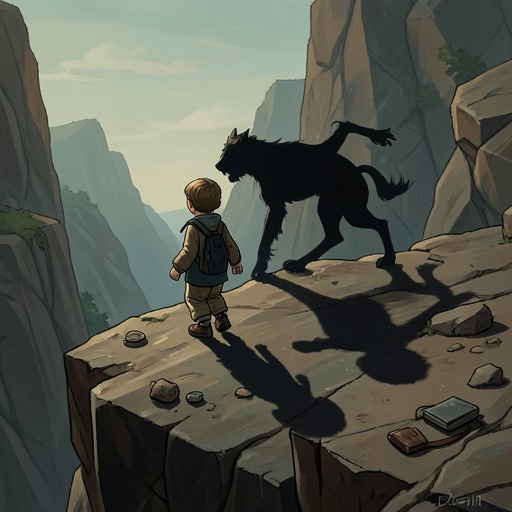
The participants had survived, but not in the form they intended. Weeks after the explosion, attacks on Peculiars began, marking the first encounters with the Hollowgasts. These creatures were generally invisible to ordinary sight, though Peculiars such as Jacob Portman could see them. It took time for the Peculiars to understand that the attackers were the experiment’s surviving participants, who had emerged from the crater left by the blast.
The experiment’s sought-after immortality therefore arrived as a profound reversal: rather than becoming gods, the participants became Hollowgasts. Their transformation connected the attempt to defeat death directly to the later threat posed by the creatures, whose existence continued long after the experiment itself.
Theories, Costs, and Consequences
The precise cause of the transformation remains disputed. One theory holds that the experiment reversed the participants’ aging so far that they were sent to a time before their souls had been conceived; their name, Hollowgasts, reflects the belief that they were left without hearts or souls. The explanation is presented as a theory, not as settled fact.
Hollowgasts are believed capable of living for thousands of years, so in one cruel sense the experiment achieved its objective. But longevity came with relentless torment, isolation, dependence on stray animals, and an insatiable hunger for the flesh of their former kin. Peculiar blood was described as their only hope for salvation; a Hollowgast that consumed enough Peculiars could become a Wight. The progression from experiment to Hollowgast to Wight shows how the faction’s attempt to escape mortality created a danger that could grow by feeding on the very people from whom its members had separated themselves.
Significance
The experiment stands as a warning about treating time as something to master without accepting its limits. Ordinary time-loop use already postpones aging at the cost of separation from the present; the renegades sought to discard that cost as well as death. Their catastrophic outcome turns their ideal of eternal youth into a grim contradiction: they obtained a kind of immortality, but in a condition defined by deprivation and an ongoing need to prey on their former community.
Its consequences also reach beyond the original participants. The resulting Hollowgasts became a continuing danger to Peculiars, while the disputed explanation of their creation leaves a gap between what is known—the explosion, the attacks, and the participants’ transformation—and what remains conjectural. The experiment’s legacy is thus both historical and interpretive: a failed bid to reverse aging that permanently altered the meaning of immortality in the Peculiar world.